
Blog
How to Blend Paint by Numbers Like a Pro: A Step-by-Step Guide

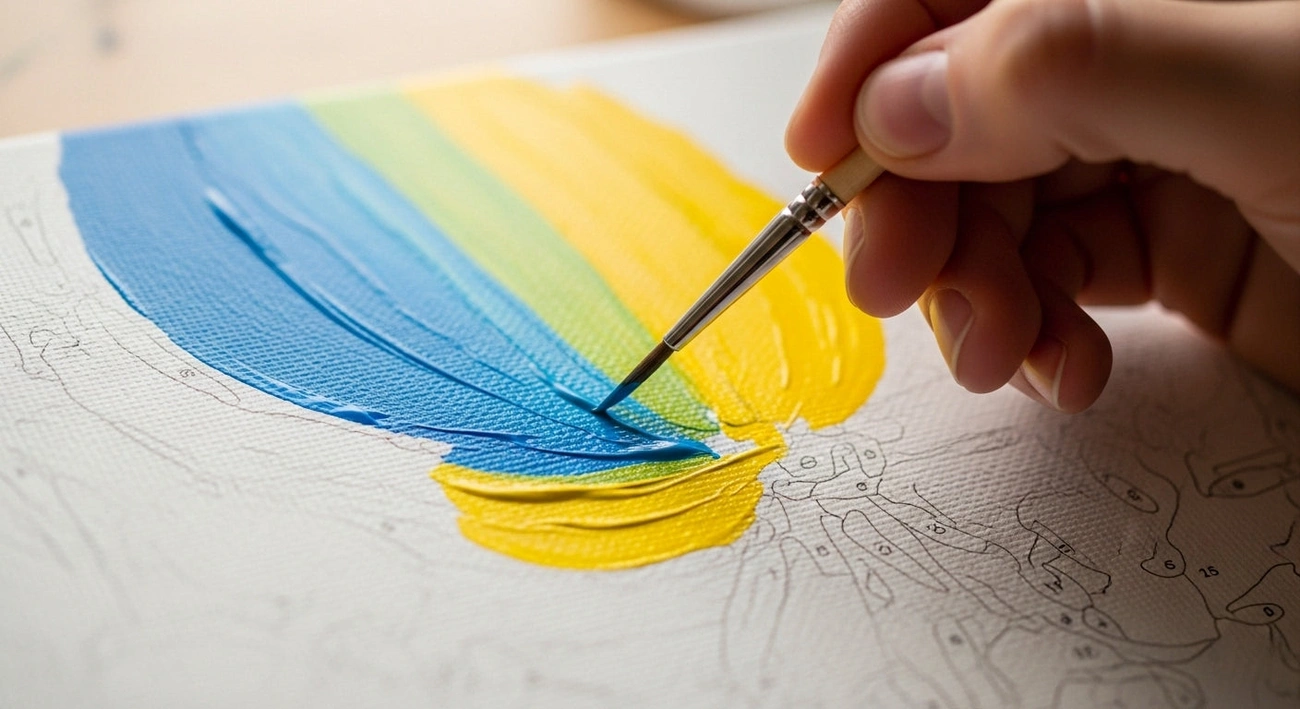
Want to know how to blend paint by numbers and transform your artwork from simple coloring to gallery-worthy masterpieces?
Paint by numbers has been a beloved hobby for nearly 70 years. Though many start with basic techniques, blending is a more advanced method that promises fantastic results. Specifically, blending allows you to mix two or more colors together, creating subtle variations that add depth and dimension to your canvas.
Whether you're wondering how to blend colors in paint by numbers or how to blend paint by numbers for beginners, we've got you covered. In this guide, we'll walk you through the step-by-step process and share proven techniques to help you master paint by numbers blending on canvas.
Understanding Paint by Numbers Blending
Paint by numbers blending is an artistic technique that combines two or more colors in a painting to create new hues and visual effects. In other words, when you blend paint by numbers on canvas, you're mixing colors together by adding one to another in small increments until you achieve the desired shade.
This technique adds depth and texture to your artwork, allowing you to create various styles beyond the basic numbered sections. To blend colors in paint by numbers, you need two or more paint colors and a brush to work with.
However, blending can be difficult to master. Many artists stress about achieving perfect blends, but in truth, it's not always necessary. From a normal viewing distance, your eye naturally blends colors together on its own. True blending, where you physically mix multiple colors on the canvas, is hard with acrylics and not required for every paint by numbers project.
Over-blending can actually make your painting look muddy or flat. Some artists prefer painting areas cleanly, then lightly softening edges where colors meet if something looks too sharp. Accordingly, blending is just one technique, not a requirement. If blending feels stressful, you're not doing anything wrong.
With practice and patience, you can learn how to blend paint by numbers for beginners and improve your skills over time.
How to Blend Paint by Numbers on Canvas: Step-by-Step
Blending paint by numbers on canvas requires the right materials and a systematic approach. Gather two or more acrylic paint colors, brushes, and a mixing station such as a plastic plate or wood paint palette.
Follow these steps to blend colors effectively:
- Apply the first color - Lay down your initial color on the canvas and let it dry completely.
- Add the second color - Once dry, apply the adjacent color to the canvas using a light touch. Keep your brush strokes moving in the same direction.
- Blend with circular motions - Take a clean, wet brush and move it in a circular motion where the colors meet. Continue the circular motion until the colors blend completely.
- Blend the edges - Use a clean brush to blend the edges into the background color for seamless transitions.
Acrylic paint dries within a few minutes to an hour after application. Thin films dry in 10 to 20 minutes, while thicker applications can take an hour or more. Before committing to your main canvas, practice your blending strokes on scrap paper to get comfortable with brush pressure and paint consistency.
Paint by Numbers Blending Techniques
Several blending methods exist beyond the basic circular technique, each suited for different elements in your paint by numbers artwork.
Horizontal wet-on-wet blending creates smooth gradients by applying colors in left-to-right strokes. Load your brush with the first color and paint horizontally. Without rinsing, load the second color and apply it below, then gently blend upward using horizontal strokes. This method works particularly well for skies, sunsets, oceans, and fabrics like velvet.
Double load blending involves loading two colors on opposite sides of a wide, flat brush simultaneously. Brush up and down in full-width strokes, creating a two-toned area rather than a complete gradient. You can adjust the color ratio between 80/20 or 50/50. Adding water helps thin the paint for easier blending. This technique enhances woodgrain, grass, water, forests, and mountains.
Wet-on-dry blending, or dry brushing, combines wet paint with dried paint. Paint your base coat with the darker color and let it dry for 30 minutes or less. Then apply the lighter color at the bottom edge and work upward with broad strokes without reloading your brush. This creates gradients from light to dark and suits nature backgrounds, animal fur, shadows, and abstract scenes.
For large areas, use a dry mop brush to scumble over color edges, creating an airbrushed effect gently.
Conclusion
You now have everything you need to blend paint by numbers like a professional artist. We've covered the fundamentals, step-by-step techniques, and advanced methods for creating stunning gradients and transitions. Remember, blending is optional, not mandatory. Don't stress about achieving perfection on every project. Practice these techniques on scrap paper first, experiment with different methods, and find what works best for you. With patience and consistency, your blending skills will improve naturally, transforming your paint by numbers artwork into beautiful, dimensional masterpieces.